Hitting the road for mental health
Jess White cycled through South Australia, New South Wales and Victoria to raise funds for the Flying Doctor.
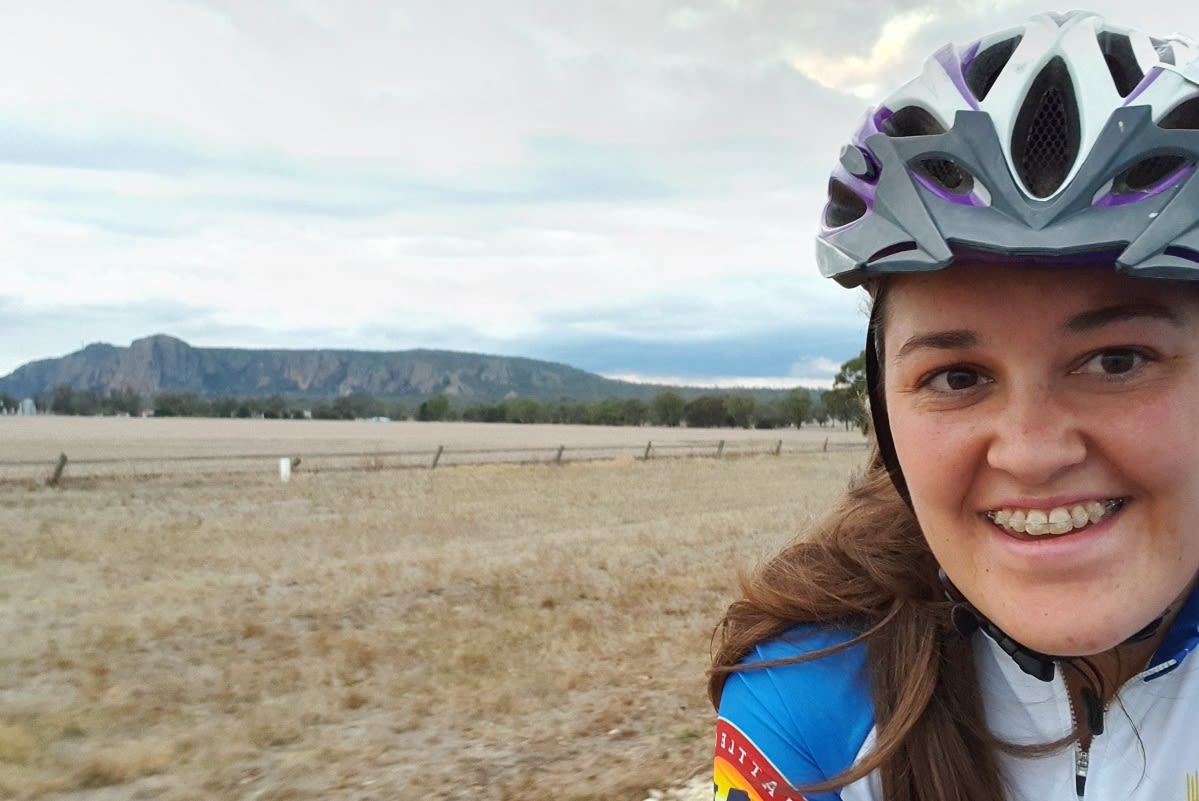

For many people, the idea of cycling over 1,000km across the Outback, completely on their own, would be quite unnerving, to say the least.
But not for Jess White.
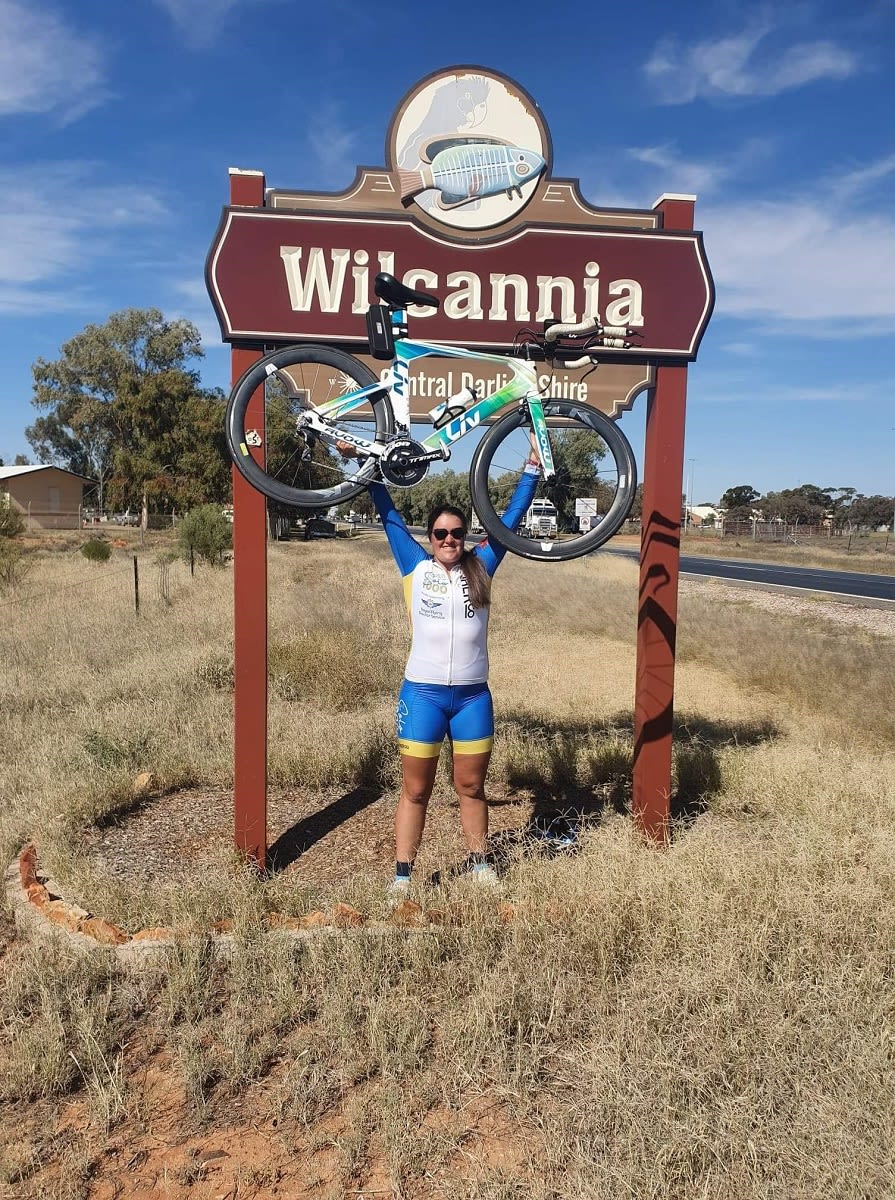
24-year-old Jess recently completed this very journey herself, riding her bike from Robe in South Australia to Wilcannia in New South Wales via Victoria’s north western regions – all while raising funds for the Flying Doctor.
Called the Solo 1000, Jess’s fundraiser was dedicated to supporting mental health services, particularly in rural areas. As both a Maryborough local and a Registered Nurse with Bendigo Health, Jess is acutely away of the unique health care needs of rural communities.
“I find the complexity of mental health intriguing,” says Jess. “Especially due to having firsthand experience with it.”
It was this connection to mental health that led to Jess’s choice to make this journey on her own.
“The idea was that by doing it solo, I would simulate a mental health struggle where people often feel alone and isolated from the outside world,” says Jess. “In saying this, I wasn’t completely alone either; I always had support from both my partner and from my family, friends and supporters online. My partner was always there offering support and always there for a debrief at the end of the day. He was by far my biggest supporter and always encouraged me to keep pushing.
“Doing it myself allowed me time to think and assess my own life and own struggles. I was able to unpack my own feelings, issues and mental health triggers, enabling me to understand myself better and have a better grasp on controlling my own anxiety. By doing this, I was able to elevate stress and pressure that I had placed on myself over the years, helping me to feel a sense of relief; like weight had been lifted off my shoulders.”
Jess’s journey was not without its pitfalls, however, and there were certainly days that were harder than others.
“I loved my time on the road, but at times I loathed it as well,” says Jess. “It was tough, both mentally and physically. There were days that I didn’t want to ride anymore, days I didn’t want to get out of bed or do what I knew had to be done, but with the support of my partner, Sam, I always got back on the road.”
On day 4, Jess took a tumble from her bike, resulting in injuries that only made things that much more difficult.
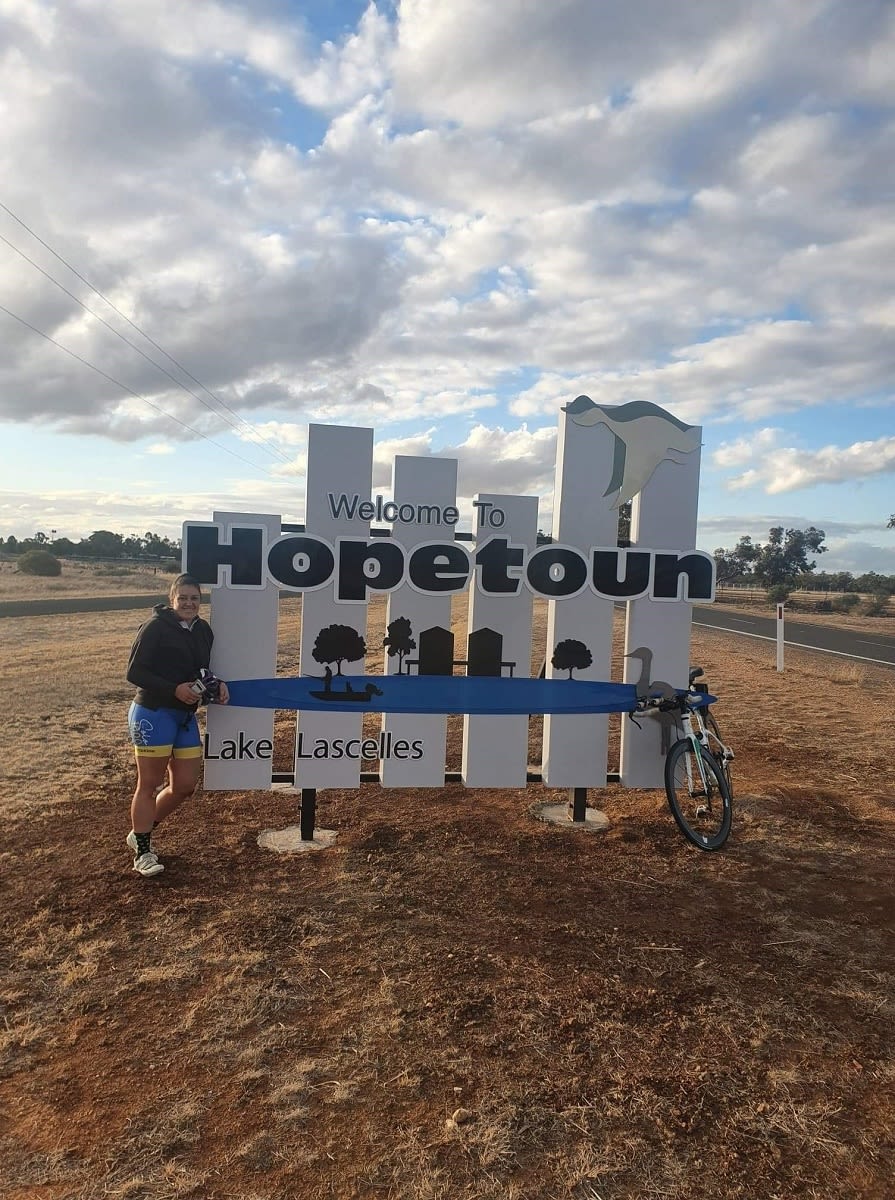
“My right knee was severely bruised and very swollen, making not only the next few days challenging but the rest of the ride. I remember the day after my accident, riding the first 25km from Hopetoun to Lascelles in tears due to the pain I felt during that time.”


However, the good experiences well outweighed the bad for Jess.
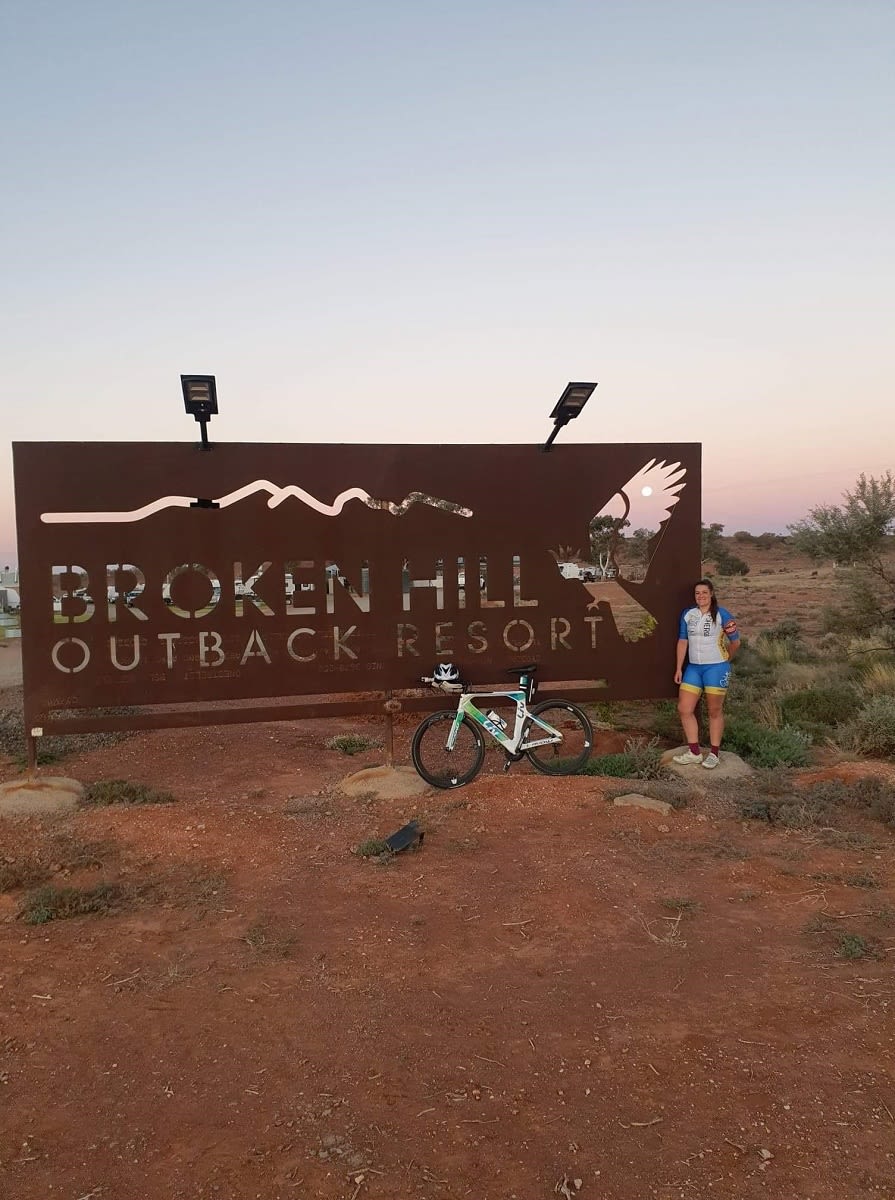
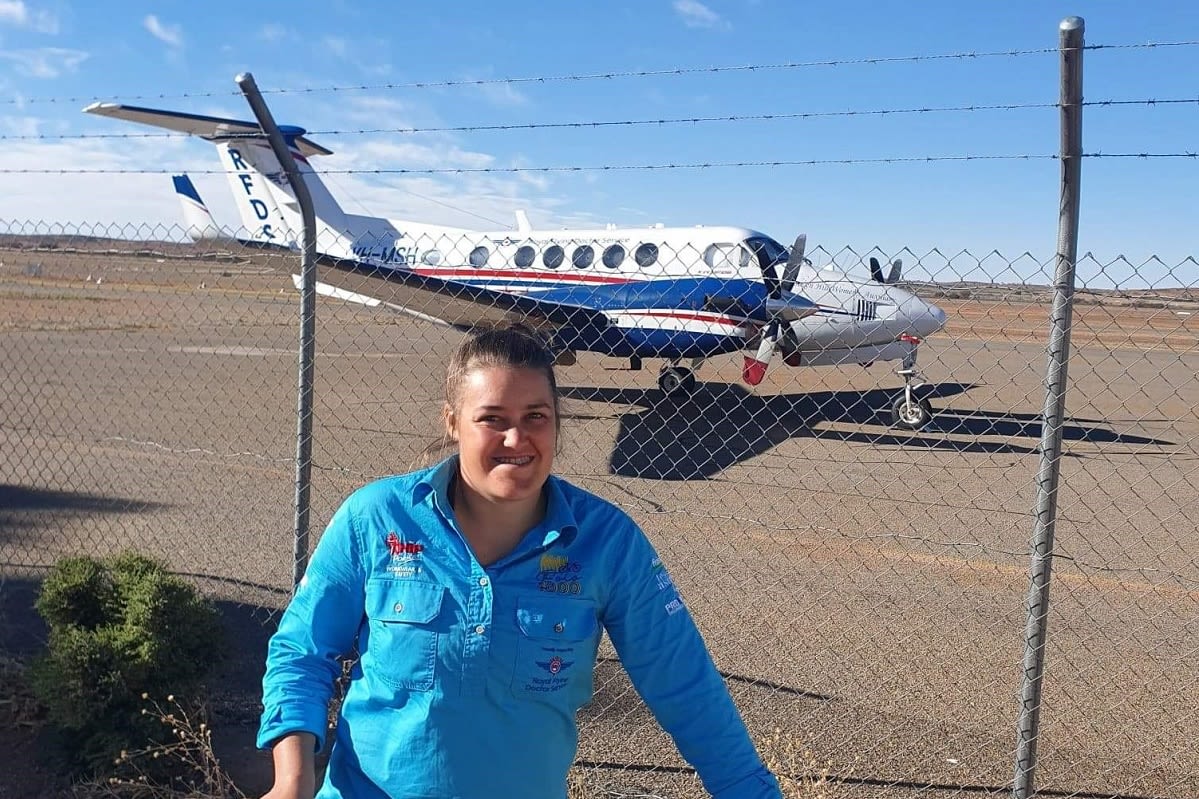
“A definite highlight for me was getting to meet all the incredible people along the way. I was able to meet and speak with lots of people from farmers to RFDS personnel. I really enjoyed these conversations and will cherish each interaction; as I was able to learn a lot about the communities I visited and the impact mental health has had on them and the individuals within them.”
One particular experience in the heart of the Mallee sticks in her memory.
“During the ride, I found out a lot about mental health in the country. I learnt towns had their own stories of hard times and their own ways to get through hard times; some even had their own ways of discussing mental health within the community. For example, the small remote town of Patchewollock has what they call The Circle of Truth, where they gather at the local pub, have a few beers and discuss the highlights and lowlights of their lives along with one hero. I was very excited to hear about this method of getting country people to have a conversation and its effectiveness.”
Now that she’s back home, Jess has had time to reflect on what this journey taught her about herself and her own mental health.
“I think that the biggest lesson I learnt from completing this journey is that being uncomfortable for a short time can help you in ways you don’t expect. Being uncomfortable taught me that I had never truly understood myself or my own capabilities and had completely underestimated myself as a whole. Learning that being uncomfortable can be more of a help than a hindrance, and enabled me to improve my life by allowing me to believe in myself, feel free and improve my mental health.”
To find out more about Flying Doctor Wellbeing, contact the team on (03) 8412 0480 or by emailing wellbeing@rfdsvic.com.au.


 Built with Shorthand